
Tracking weight buoyancy on your dives
How much lead you carried is only half the story. When dive conditions arrived, every dive gained a place to record the weight, but the number on its own never says whether it was any good: nine kilos is right for one diver in a 7 mm suit and far too much for the same diver in a shorty with a steel tank. What you want back on the next dive is the verdict, not the figure.
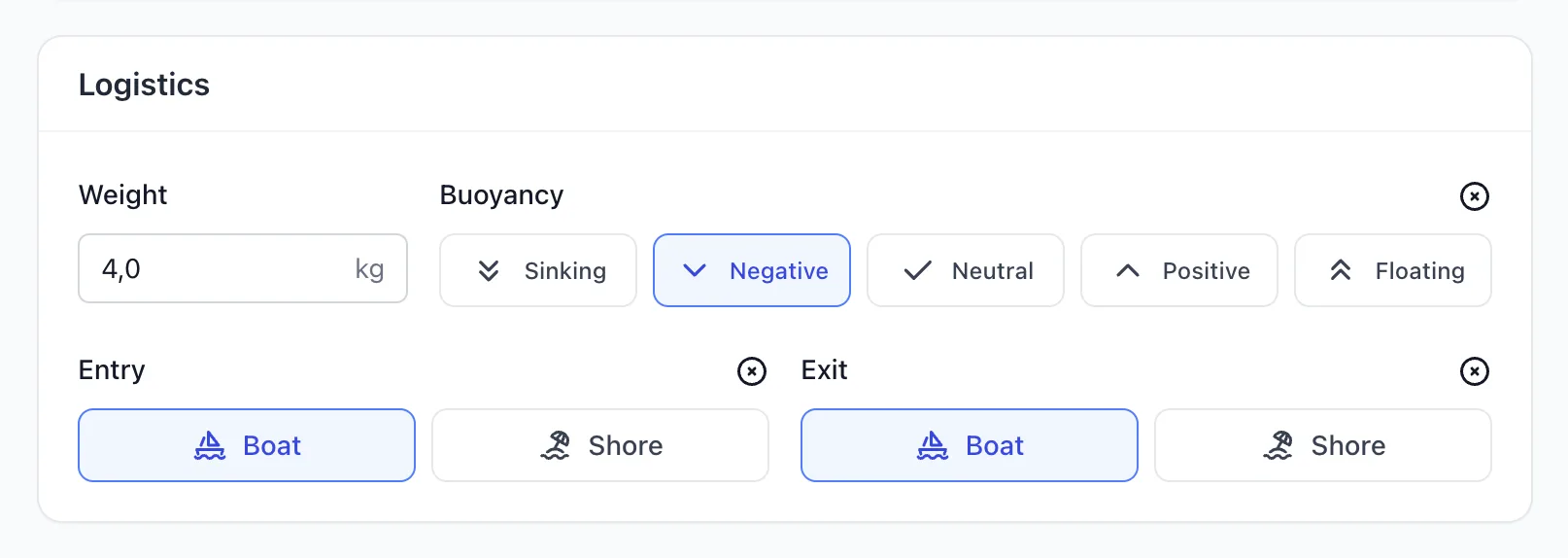
So now you can record the verdict too. Beside the weight on the dive form sits a Buoyancy rating, five steps centred on neutral:
- Sinking — badly over-weighted, finning to stay off the bottom.
- Negative — a touch heavy.
- Neutral — the weighting was right.
- Positive — a touch light.
- Floating — too light to hold a safety stop.
You read it back on the Conditions tab. The rating trails the kilograms in the Logistics panel as a single mark, so one row tells you how much lead you carried and how it went.
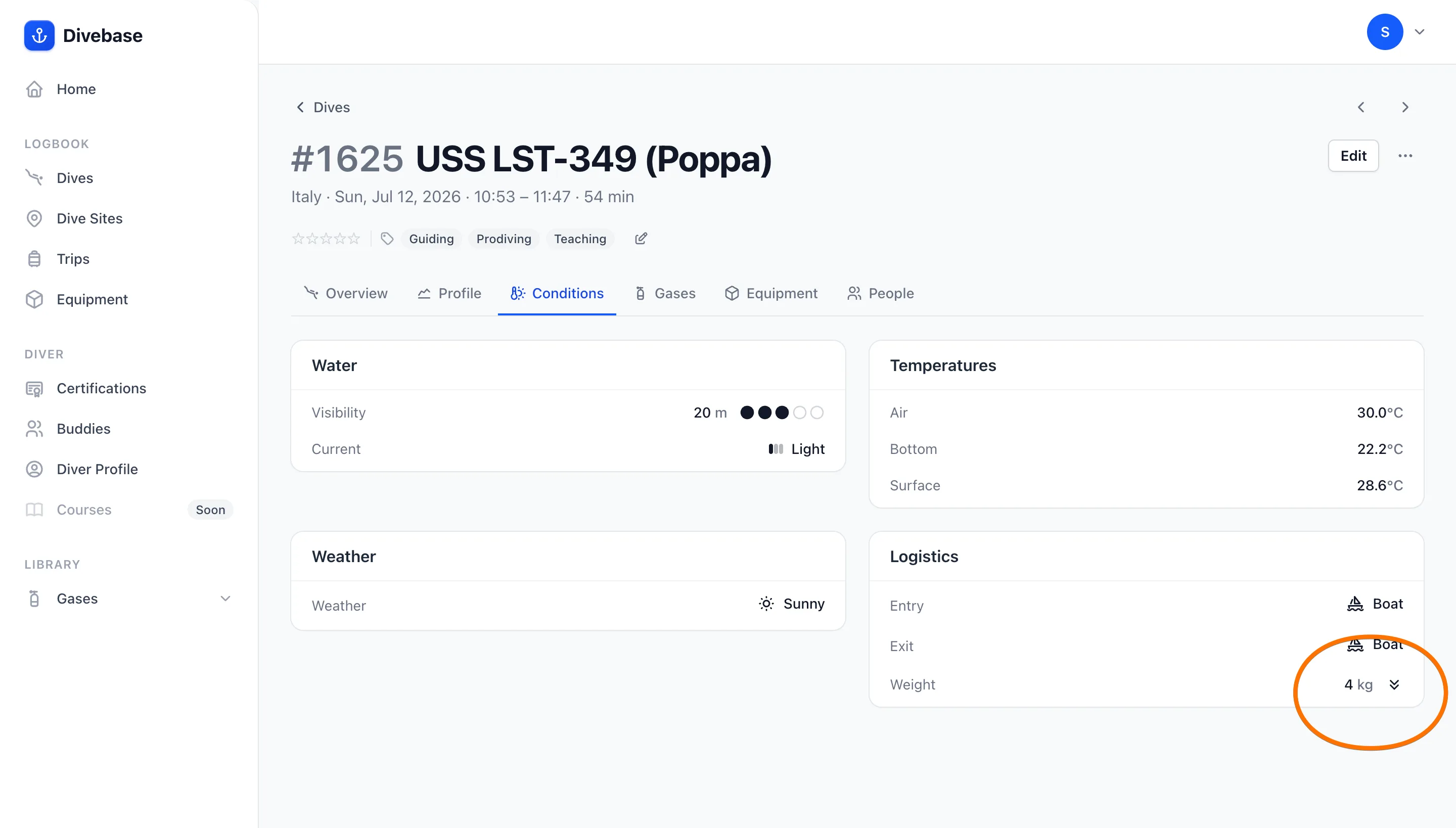
If you're still working your way towards neutral buoyancy, this is the field that shows you the trend. A run of Positive ratings says you dive light, so you add half a kilo next time instead of guessing all over again. And if you travel, it helps too. Every trip to the Red Sea sets me the same puzzle: saltier water that floats you higher, a light aluminium 12 L in place of the heavy steel 15 L I dive in the Mediterranean, a different suit on top. It takes a dive or two to settle it, and one dive marked Neutral is far easier to find later than a whole trip of weights with no clue which one was the good one.
One last thing! Neutral is an explicit choice, and it's different from leaving the rating blank. This is something I particularly cared about, because in many dive logs you can't tell the difference between "not recorded" and "not a problem". Selecting Neutral states that the weighting was right; a dive with no rating says only that you never made the call.
Weight yourself honestly, dive safe... and neutral! 🤿