
A divelog for open circuit, rebreather, apnea, and more
Not every dive is the same kind of dive. Today I want to highlight a quieter feature of the Divebase logbook: the ability to record how you dived, not just where and how deep.
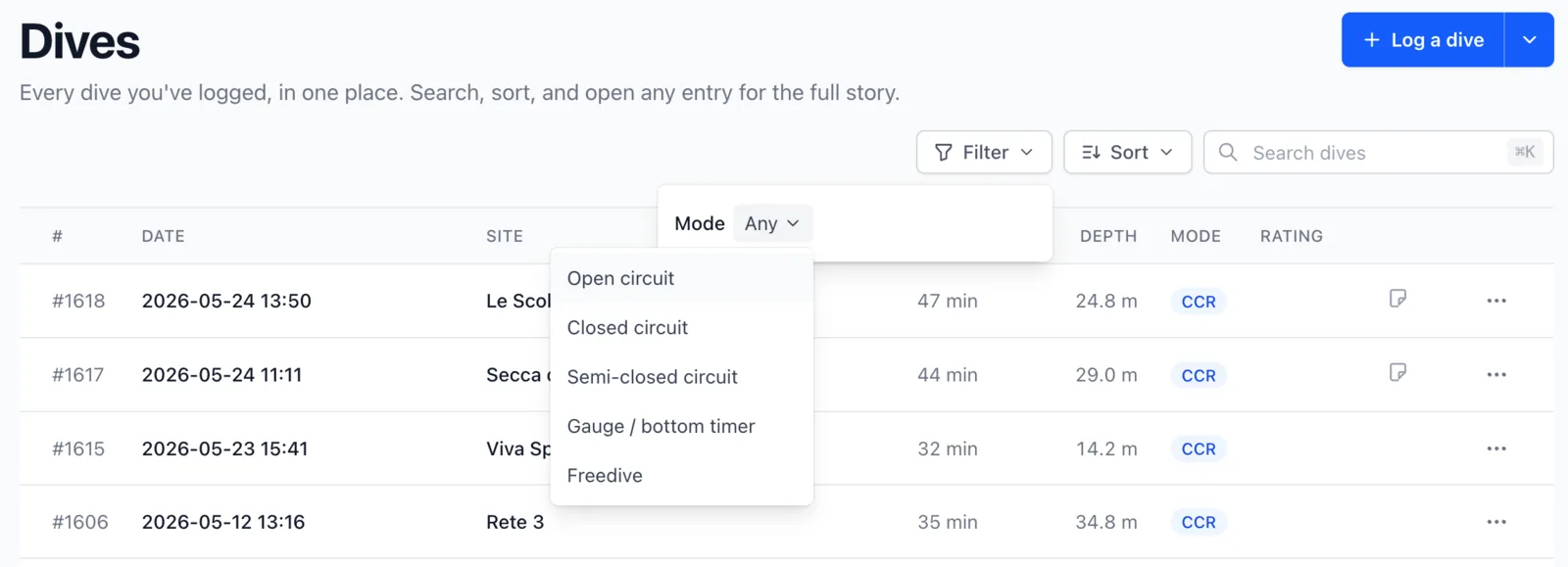
We call it the dive mode, and right now it understands five:
- Open circuit: regular scuba. You breathe from the tank and your exhaust bubbles up into the water. The familiar default most of us started with.
- Closed circuit: a closed-circuit rebreather (CCR). It recycles your breath, scrubbing out the CO₂ and topping up the oxygen, so almost nothing leaves the loop.
- Semi-closed circuit: a semi-closed rebreather (SCR). The middle ground, recycling part of the gas and venting the rest.
- Gauge / bottom timer: the computer steps back and acts purely as a depth gauge and timer, tracking no gas at all. A staple of technical diving.
- Freedive / Apnea: breath-hold diving. No tank, no gas, just one breath and the blue.
Most logbooks are built around the idea that a dive is the dive: a single tank, open circuit, the way most of us learned. But that's not the whole picture. Nearly every dive computer sold today can drop into gauge mode and act as a plain bottom timer. And plenty of computers are designed for one job in particular: the Shearwater Petrel for rebreather divers, or a dedicated freediving computer like the Suunto D4f for apnea. Here's the thing: all of these are dives, and they all belong in your logbook.
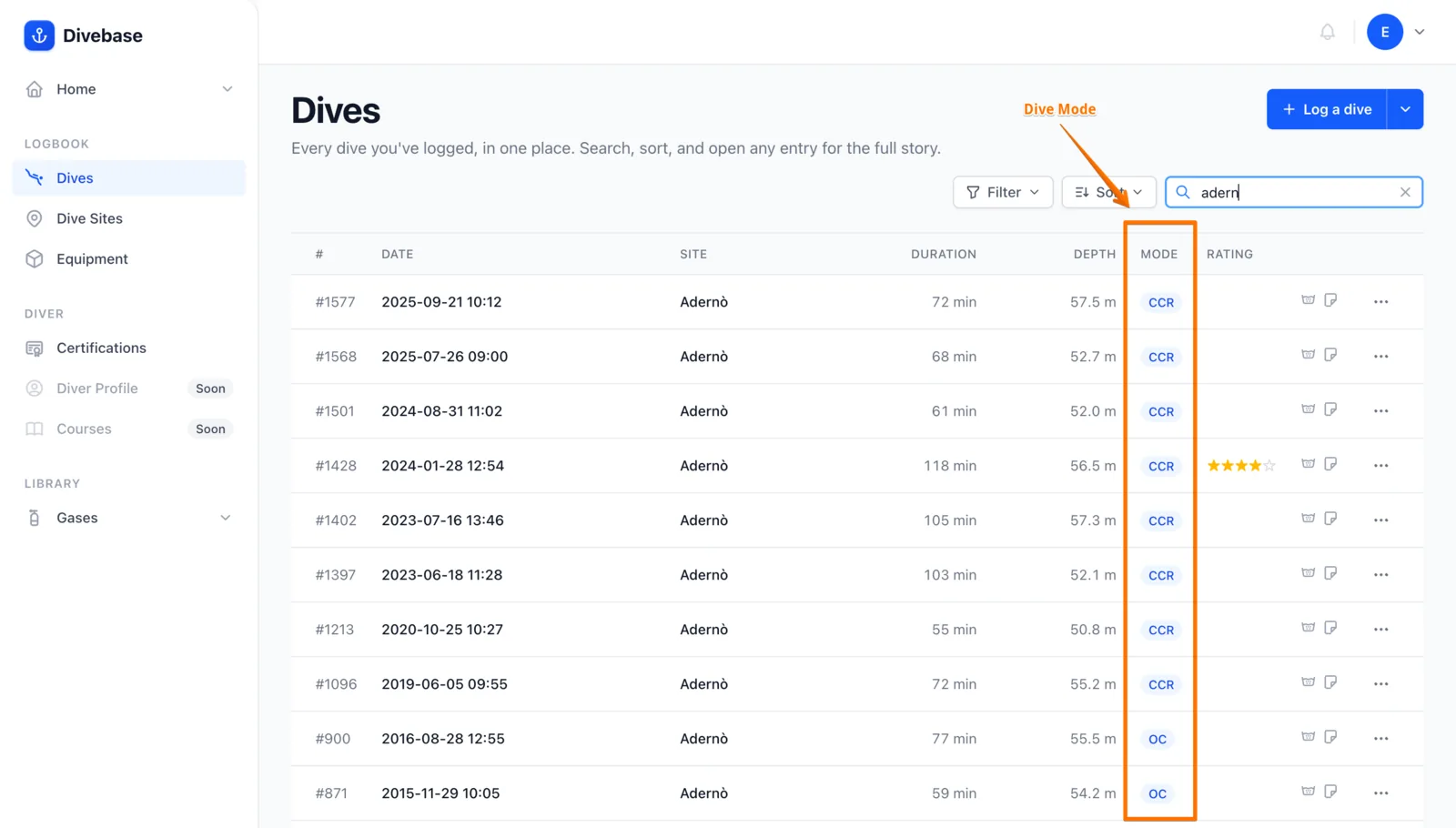
In Divebase the dive mode isn't buried in a notes field. It rides along in the dive list, right next to the essentials.
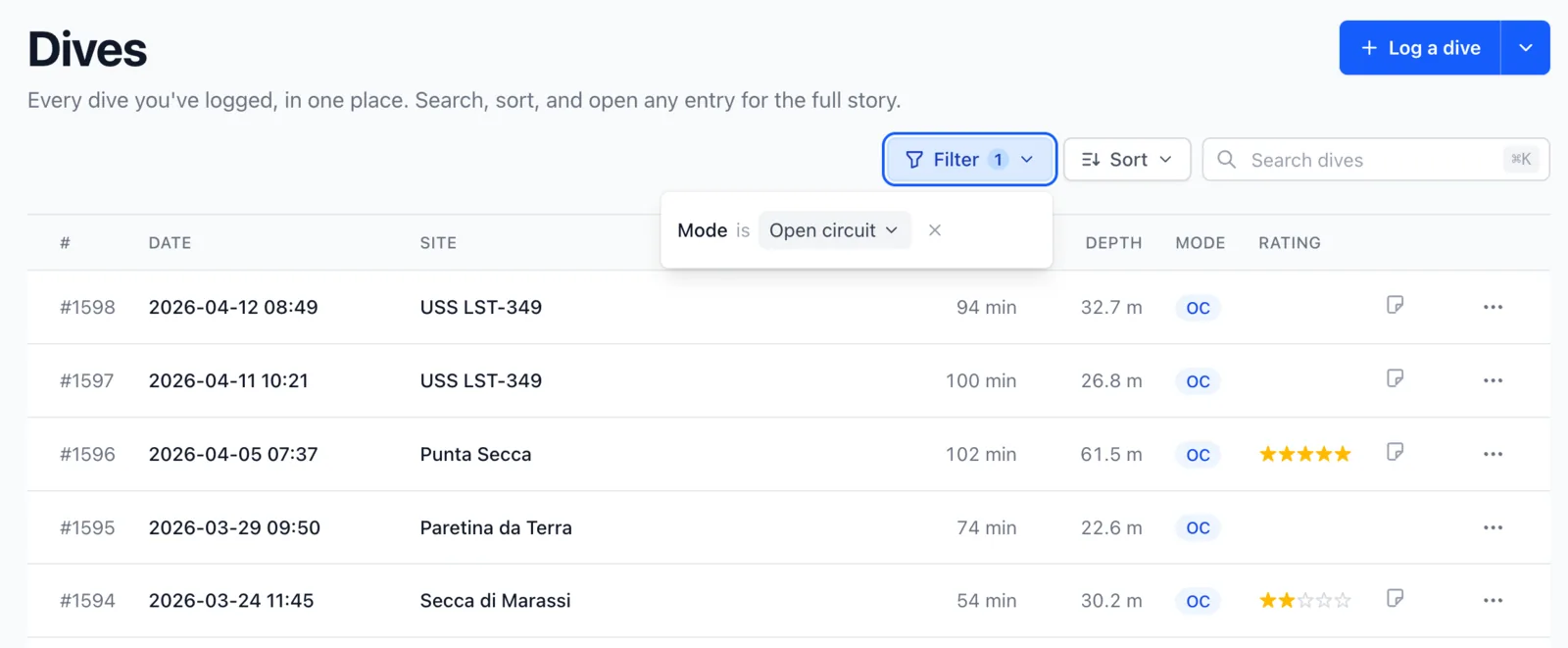
And because it's first-class, you can filter your whole dive log by it. Want to see only your rebreather dives, or just your freedives? One tap.
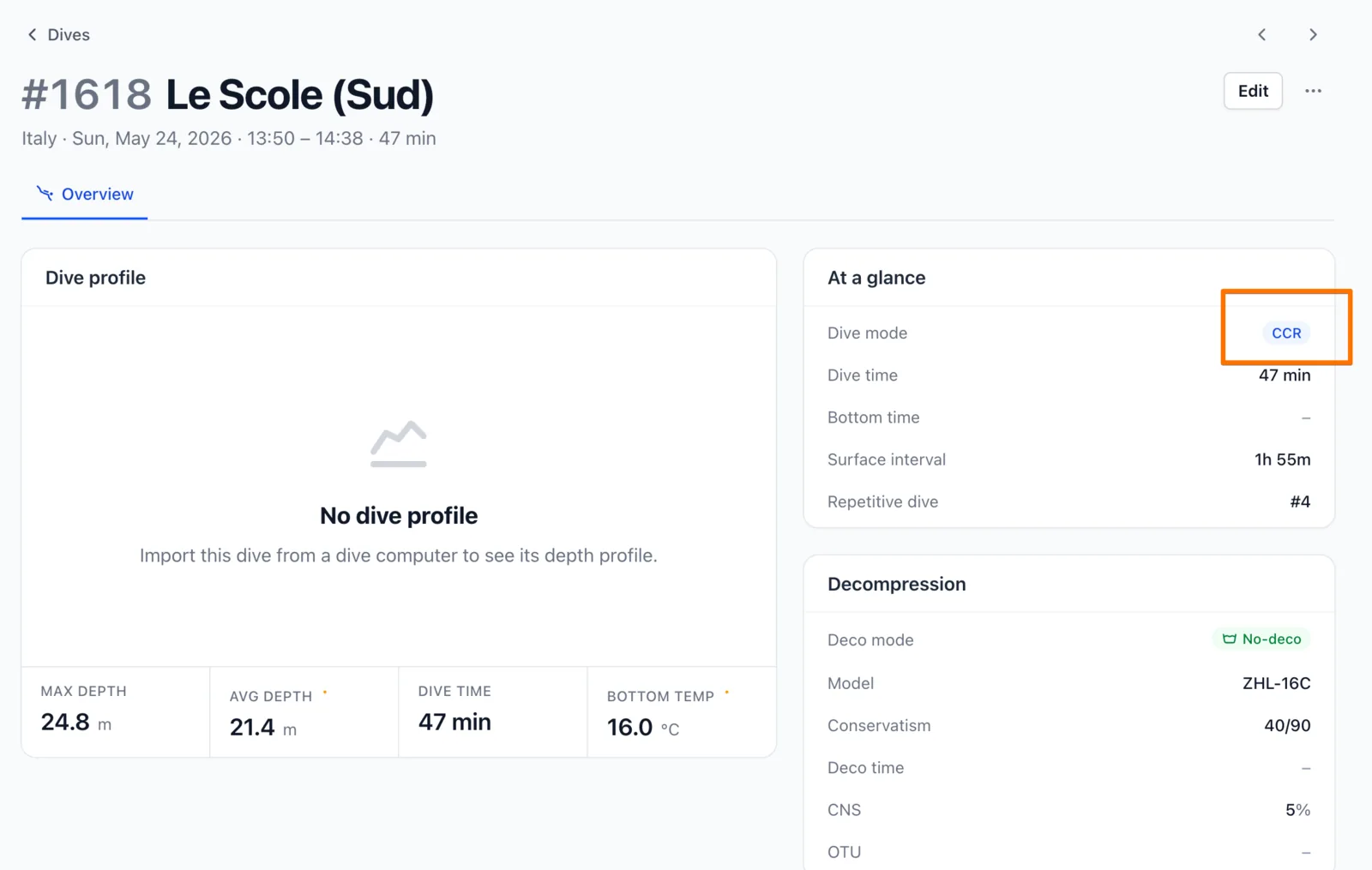
Open any dive and the mode is there too, in the at-a-glance panel, telling you what kind of dive it was before you read another line.
When I built Dive Exporter, the type of dive was front and center. It turned out to be anything but cosmetic: the mode shapes what the dive computer records during the dive and how it behaves underwater. A rebreather logs its oxygen sensors; a gauge dive logs little more than depth and time; a freedive is a sequence of short, sharp descents.
I wanted that same understanding in Divebase, which is why the dive mode landed early. From here we can build the things that only make sense once the app knows what kind of dive it's looking at: rebreather sensor traces, apnea session stats like the surface recovery between descents, and more.
Safe diving, whatever your mode: open circuit, closed circuit, or one long breath. 🤿